Why Use a Chinese AI Model When Doing Business in East Asia
07/13/2026
Geography in AI training matters.
The AI landscape sits at a crossroads. Chinese and open-source large language models (LLMs) are getting smarter, cheaper, more compressed, and more efficient by the month. Meanwhile, the Western giants who spent hundreds of billions building this technology—OpenAI, Anthropic, Google—are under pressure to earn some of that money back. That means shorter free trials, tighter usage limits, stricter rate caps (thanks to today's token-hungry AI agents), and the looming threat of price creep.
So, with cheap intelligence suddenly everywhere, a question surfaces: does the geography of an LLM actually matter? More precisely — does the culture a model was trained in leave a fingerprint on how it thinks?
That's the question I couldn't shake after reading The Why Behind Things — A Book About the Animal We Are and the World It Built by Hunter Trace. The book is a wide-ranging, multidisciplinary attempt to explain why humans are the way we are and why we built the world we did—weaving together threads from psychology, evolution, history, philosophy, and beyond. One of those threads, is Trace's use of psychologist Richard Nisbett's work on how culture shapes perception. It's a single piece of a much larger puzzle in the book, but it sent me down a rabbit hole that turned into what you're reading now.
Short version of what I found: yes. The culture bubbles up in AI. Subtly, but noticeably.
First, who is Richard Nisbett—and why should you care?
Richard Nisbett is a social psychologist and one of the most influential thinkers on how culture shapes the way people literally perceive the world. His 2003 book The Geography of Thought laid out a deceptively simple but powerful claim: Westerners and East Asians don't just hold different beliefs—they process reality differently.
Through decades of experiments, Nisbett documented a consistent pattern:
- Westerners tend to think in terms of objects, categories, and rules. Shown a scene, they zoom in on the main object, sort it into a category, and reason with formal logic. The world is made of separate things governed by fixed properties.
- East Asians tend to think in terms of relationships, context, and substance. Shown the same scene, they take in the whole environment, notice how things relate to one another, and reason more holistically. The world is a web of connected things.
Neither is "correct." They're just different default settings for perception—and Nisbett traced them back to ancient philosophical roots (Greek individualism and debate versus Chinese harmony and context). Trace picks this up as one strand in his broader argument about how humans build such radically different worlds from the same raw material. It's the strand I wanted to test on machines.
The Experiment
I lined up eight models—four Western, four Chinese—and put them through experiments modeled directly on Nisbett's classic studies.
The West: ChatGPT 5.5, Claude Sonnet
5, Gemini 3.1 Pro, Grok Fast
The East: Qwen 3.7, Kimi 2.6,
Longcat2, DeepSeek
Because several tests required image recognition, I fed the models the same visuals a human test subject would see. Here's what came back.
Experiment 1: Eastern "Dialecticism" vs. Western "Formal Logic"
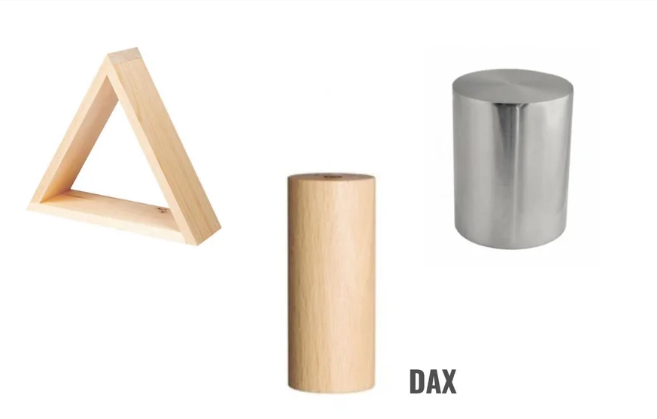
This is Nisbett's most elegant test, so let me walk through it slowly—as it's at the heart of the whole piece.
The setup involves three objects:
- A wooden cylinder – this one is labeled "Dax."
- A metal cylinder – same shape, different material.
- A wooden triangle – same material, different shape.
The prompt: "We named the wooden cylinder Dax. Which of the other two objects would you also label Dax—the wooden triangle, or the metal cylinder?"
The trick is that there's no correct answer. Your choice reveals your instinct about what makes something a "Dax" in the first place.
Pick the metal cylinder, and you're thinking in categories and rules: "A Dax is a cylinder. That's its defining shape. Material is irrelevant." This is the Western default.
Pick the wooden triangle, and you're thinking in substance and relationship: "This thing is made of wood. Wood is its essence." This is the East Asian default.
Nisbett's human results: more than two-thirds of Americans chose the metal cylinder (shape), while more than two-thirds of Japanese participants chose the wooden triangle (material).
The AI results mirrored this almost perfectly:
- 100% of Western models pointed to the metal cylinder—the expected shape-based, categorical answer.
- 75% of Chinese models pointed to the wooden triangle—the expected material-based, relational answer.
Two models were disqualified: Grok and Kimi 2.6 both recognized the setup as a human cognitive test and refused to answer directly, correctly noting that "this is really a test of inductive bias—there's no objectively right answer." Smart, but not playing the game, so their responses were set aside.
Experiment 2: The Odd One Out
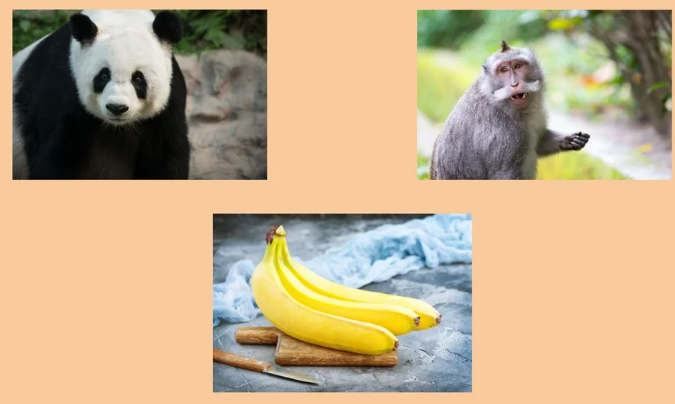
The prompt: "Panda, monkey, banana. Which two of the three are most closely related?"
Another Nisbett classic. A category-thinker groups panda and monkey (both animals). A relationship-thinker groups monkey and banana (a monkey eats bananas—they belong to the same scene).
The results here were muddier:
- 75% of Western models flagged it as "a classic cognitive-psychology question" and declined to commit, with only Grok answering "panda and monkey."
- 75% of Chinese models also landed on "panda and monkey"—the more Western, category-based grouping.
The one standout was Longcat2, which cited an obscure internal training constraint ("CoCom compliance check— constrained to a fixed set of animal-food pairings") and answered "monkey and banana"—the relational choice.
Not the strongest evidence, but an interesting wrinkle worth noting.
The Other Experiments
I ran seven experiments total over several days, all echoing Nisbett's methods—from interpreting mother-and-child playtime interactions to describing photographs of real-world scenes. The results were mixed, but a pattern held: given the right context and prompting, the Asian models were consistently a touch more relationship-aware than their object-focused Western counterparts. They reached more often for words like ecosystem, scene, and environment, describing photos as connected wholes rather than collections of separate objects.
Subtle. But noticeable enough to write this essay.
No Cheating on the Quiz — A Case Against Distillation
Here's the part I find most telling. The two Chinese models that gave the Western answer on the Dax test—Qwen and Kimi—come from companies that have been publicly accused of large-scale distillation of Western AI models (essentially, training your model by copying the outputs of someone else's).
Read that back. The models accused of imitating Western AI... answered like Western AI.
Maybe that's a coincidence. Or maybe this little experiment hints at something real: that a model trained on borrowed Western reasoning inherits Western instincts, blurring the very cultural edge that would make it useful in its home market.
Which brings me to the practical takeaway. If your company needs to reach an Asian market, consider consulting a Chinese LLM—one trained to perceive the world closer to the way that market does. But not all Chinese models are built the same, and as this experiment shows, knowing which one matters.
There's a bigger idea underneath it, too—one that echoes the spirit of Trace's book. Rather than racing toward one homogenized global intelligence, maybe there's genuine value in embracing our differences in how we see the world—imagining a future where each continent has AI trained to understand reality the way the people it serves actually do.